MoMoCon 2025: Intro to Anime & Manga Studies Panel
This panel was co-hosted by The Anime View’s Peggy Sue Wood & Dr. Susan Noh. I have taken quite a few trajectories with this blog and our socials, but one thing that has always piqued my interest is talking about anime and manga full-time. We have discussed hosting watch parties with Muslims in the past,…
This panel was co-hosted by The Anime View’s Peggy Sue Wood & Dr. Susan Noh.
I have taken quite a few trajectories with this blog and our socials, but one thing that has always piqued my interest is talking about anime and manga full-time. We have discussed hosting watch parties with Muslims in the past, as well as our panels and discussions of spirituality in anime (namely ATLA), but, there is a bug that I want to teach and relate it to communities who think they can’t relate to it (as seen in my Spirited Away post). In this panel, Wood and Noh explain and provide references and resources on how you can incorporate anime and manga into under/postgraduate studies and beyond.
Anime and manga studies are an emerging field, and there are plenty of trends in recent publications and cultural interests that show in the media. For those who are interested, it does not necessarily mean you need to focus on film or asian studies, but if that is your path, you are able to incorporate it into what your end goal is. These studies can overlap into fields including, but not limited to, Asian, media, fan, and cultural studies, sociology, otaku subculture, anthropology, and literary studies, to name a few. You also do not have to have a background or formal degree to join the field!
Wood and Noh encouraged those interested in animanga studies to lead with passion and interest while incorporating cultural and marketing understanding. Some rewards of the field include publishing opportunities, a rich community, freebies, and, to some degree, compensation for conventions. Some cons were the fact that it is still an emerging field and is not well respected in the States yet, so you would need to rely more on your research.
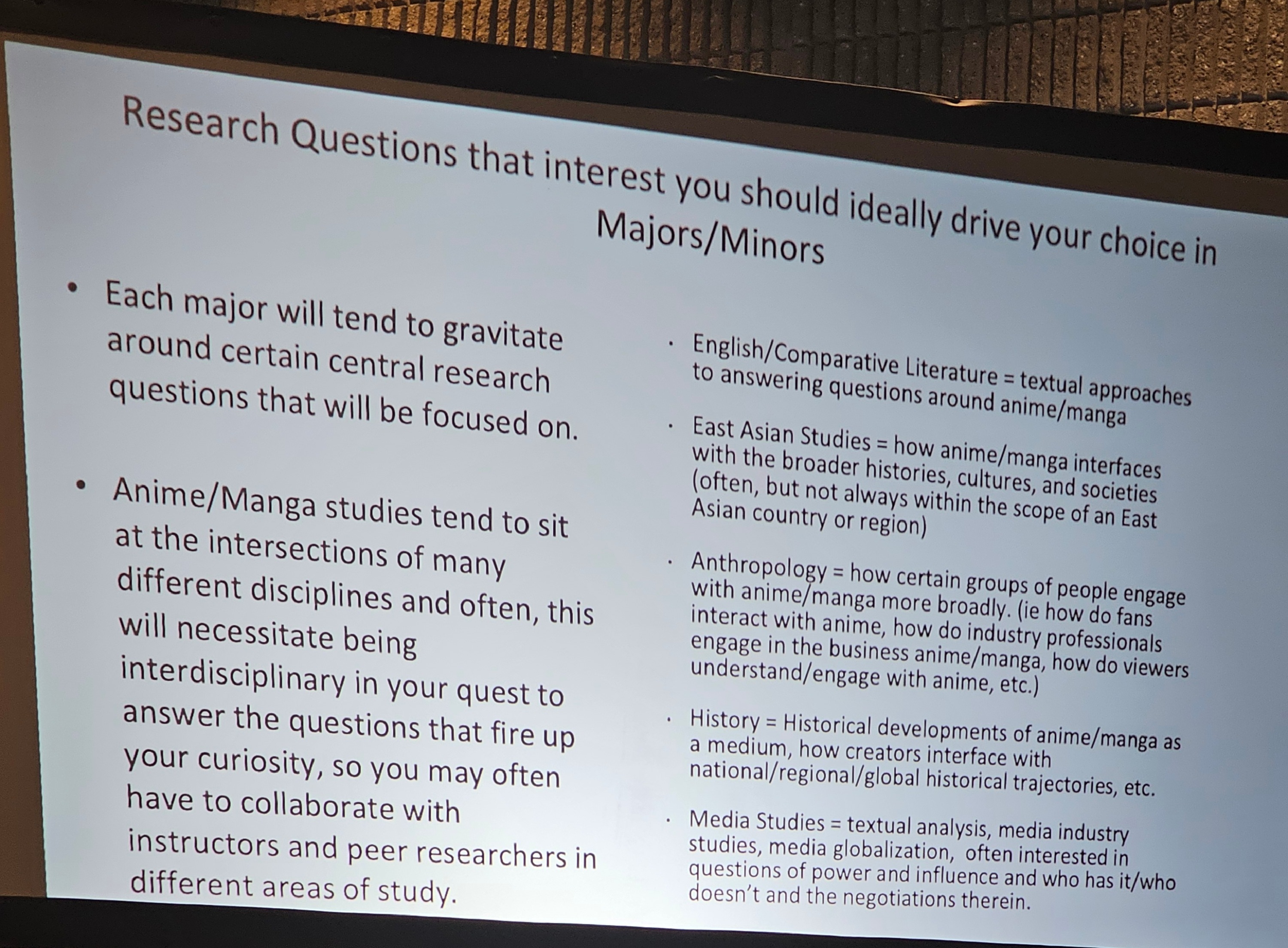
Your research questions, the reason you’re asking the question, should drive your choice in majors/minors. An example Dr. Noh used was “how do Japanese people interpret anime, while using research from your own country?” If you’d like to continue down this path, a Master’s is great, but a PhD will pay for your research.
Animanga studies intersect with a plethora of different disciplines, so the opportunities are open for your interpretation. Because it’s such a new topic of research (in the States and maybe the Western world at large), you still have some kind of free rein for asking your questions. The best part about research is that things can be disputed, challenged, and collaborated on.
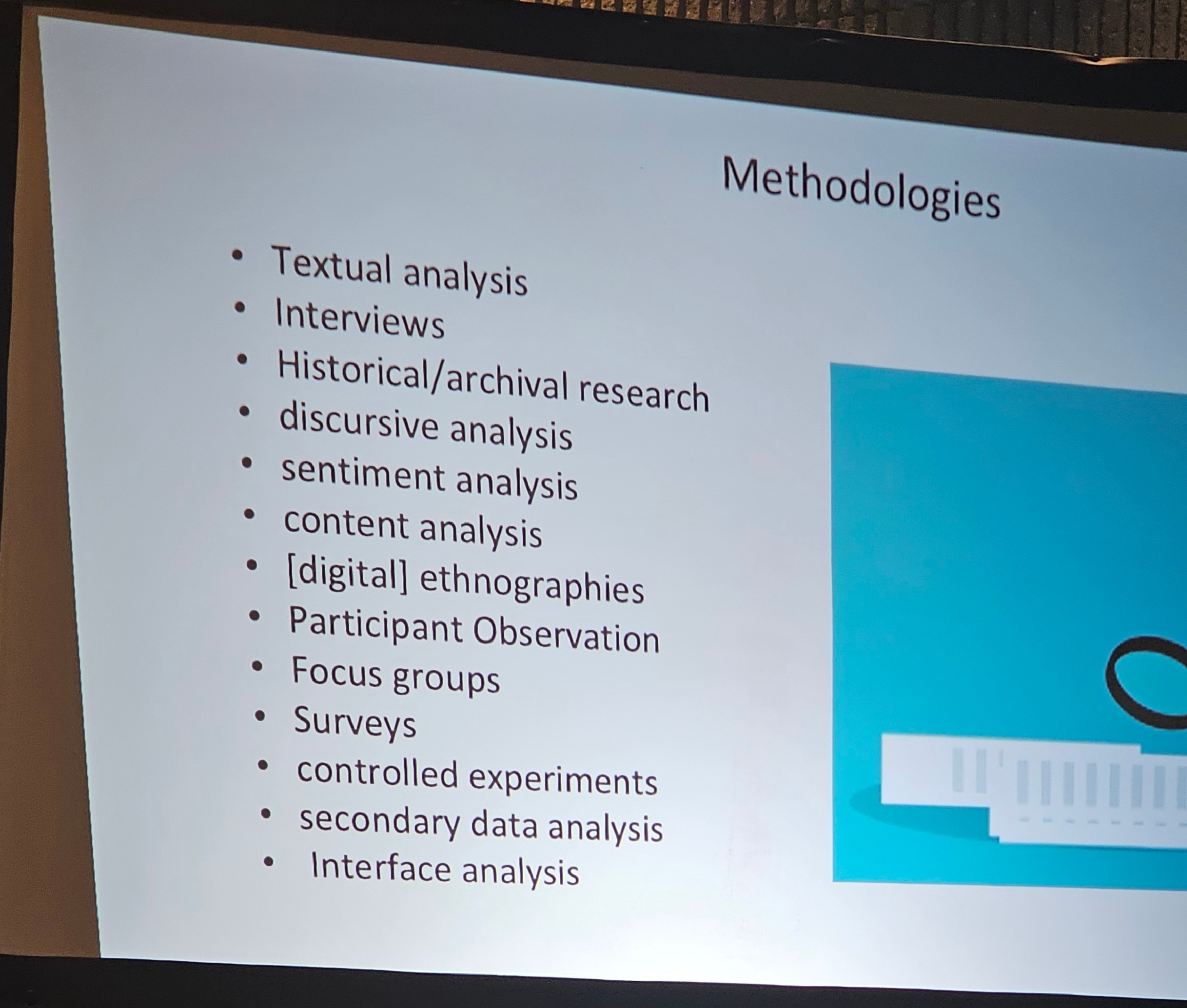
If you do not have a degree, you can always gain personal research by going to conferences and conventions, reading journals like JAMS, and interacting with others digitally or in person. They also provided an amazing resource of Portland University’s anime/manga studies, which you can attend and pay out of pocket!
On the chance you go the personal research route, Wood recommends making your presentations first, then applying for the panels and speaking opportunities. It shows you’re prepared and you know what you’re talking about. Starting off at smaller conventions is good to build up practice and community. Focus on building your online presence (in whatever way that looks like!), from there, who knows where you can end up! Regardless of what you decide, be sure to cite your sources, then cite THOSE sources!
For your reference
The co-hosts end with words that we can all relate to,
“Anime is mainstream, but not mainstream enough.”
Once again, thank you to MomoCon for the opportunity for press.
[…] attend a panel hosted by The Anime View Founder & Editor-in-Chief, Peggy Sue Wood, titled Introduction to Anime & Manga Studies. A wonderful panel that inspired each person in attendance. As someone who recently got my […]
[…] no lack of excitement in panels. I frequented the majority of the JAMS panels via inspiration from MomoCon. I’ll provide a summary of the panels I attended […]





 religiouslynerdy.com
Leave a comment